


The story of Esther
- roneylama8
- Aug 14, 2024
- 3 min read
Updated: Aug 21, 2024

In the ancient Persian Empire, during the reign of King Ahasuerus (also known as Xerxes), a grand banquet was held. Queen Vashti, the king’s wife, refused to appear before the king and his guests, leading to her being deposed. The king then sought a new queen, and a search was conducted throughout the empire.
Esther, a young Jewish woman, was living in the capital city of Susa with her cousin Mordecai, who had raised her after her parents died. Esther was known for her beauty and grace, and she was brought to the king’s palace along with many other young women. After a year of beauty treatments, Esther found favor in the eyes of the king and was chosen to be the new queen. However, she kept her Jewish identity a secret, as advised by Mordecai.
Meanwhile, Mordecai discovered a plot to assassinate the king and informed Esther, who in turn told the king, giving credit to Mordecai. The conspirators were apprehended, and Mordecai’s loyalty was recorded in the royal chronicles.

Haman, a high-ranking official in the king’s court, was promoted to a position of great power. He expected everyone to bow to him, but Mordecai refused, as he would only bow to God. This infuriated Haman, and he decided to destroy not only Mordecai but all the Jews in the empire. Haman convinced the king to issue a decree to annihilate all Jews on a specific date, casting lots (called “Purim”) to determine the day.
When Mordecai learned of the decree, he tore his clothes, put on sackcloth and ashes, and mourned publicly. He sent a message to Esther, urging her to plead with the king for her people. Esther was initially hesitant, as approaching the king without being summoned could result in her death. However, Mordecai reminded her that she might have been placed in her royal position for such a time as this.
Gathering her courage, Esther asked Mordecai and the Jews in Susa to fast and pray for three days. She then approached the king, who extended his golden scepter to her, sparing her life. Esther invited the king and Haman to a banquet she had prepared. At the banquet, the king asked Esther what her request was, promising to grant it up to half his kingdom. Esther requested that the king and Haman attend another banquet the next day, where she would reveal her petition.
That night, the king couldn’t sleep and had the royal chronicles read to him. He was reminded of Mordecai’s earlier act of loyalty in saving his life. The next day, the king asked Haman how to honor someone the king delighted in. Thinking the king meant him, Haman suggested a lavish public honor. To his shock, the king ordered Haman to bestow this honor on Mordecai.
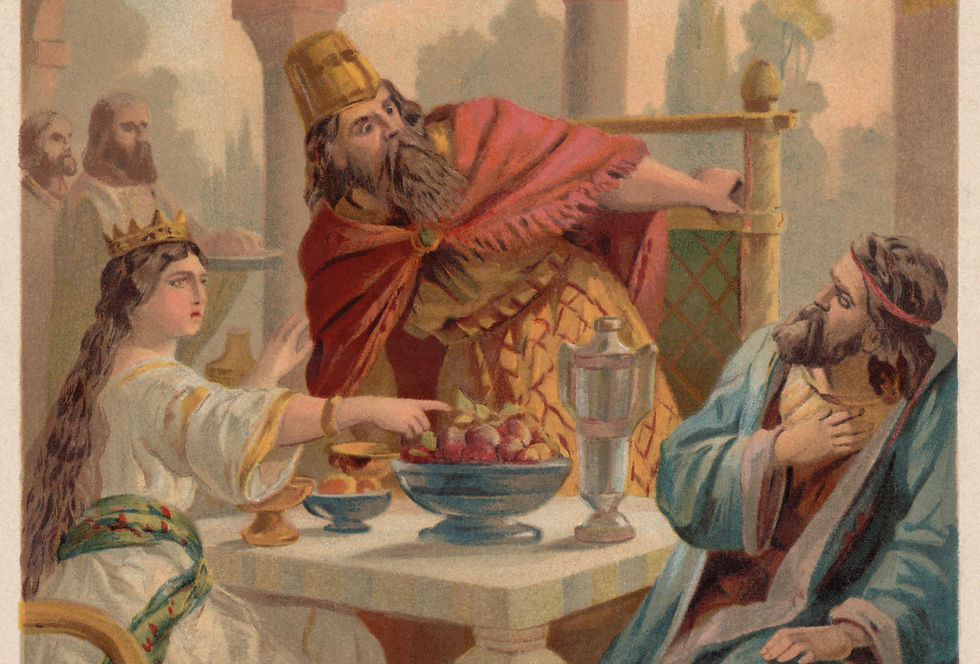
At the second banquet, Esther revealed her Jewish identity and exposed Haman’s plot to annihilate her people. The king was enraged and ordered Haman to be executed on the gallows he had prepared for Mordecai. The king then issued a new decree allowing the Jews to defend themselves against their enemies.
On the appointed day, the Jews triumphed over those who sought their harm. Mordecai was elevated to a position of great authority, and the Jewish people celebrated their deliverance. This victory is commemorated annually in the Jewish festival of Purim, named after the lots Haman cast.


Comments