


MOSES
- Steven Quenn
- Jul 31, 2024
- 2 min read

Updated: Aug 2, 2024
According to the Bible, Moses was born to Hebrew parents during a time when the Pharaoh of Egypt had ordered the killing of all Hebrew male infants. His mother hid him for three months and then placed him in a basket in the Nile River, where he was found by Pharaoh's daughter and raised in the Egyptian royal court.

Moses fled Egypt after killing an Egyptian taskmaster who was mistreating a Hebrew slave. He spent years living in exile as a shepherd in the wilderness of Midian. It was there, at Mount Horeb (also known as Mount Sinai), that Moses encountered God in the form of a burning bush. God commissioned Moses to return to Egypt and lead the Israelites out of slavery.
Moses returned to Egypt and, with the help of his brother Aaron, confronted Pharaoh with the demand to release the Israelites. After a series of plagues, Pharaoh finally relented, and Moses led the Israelites out of Egypt in an event known as the Exodus. During their journey through the wilderness, Moses received the Ten Commandments and other laws from God at Mount Sinai, establishing a covenant between God and the Israelites.
The Israelites wandered in the wilderness for 40 years, during which Moses served as their leader, mediator with God, and lawgiver. He faced numerous challenges, including rebellion among the people and moments of doubt and frustration.
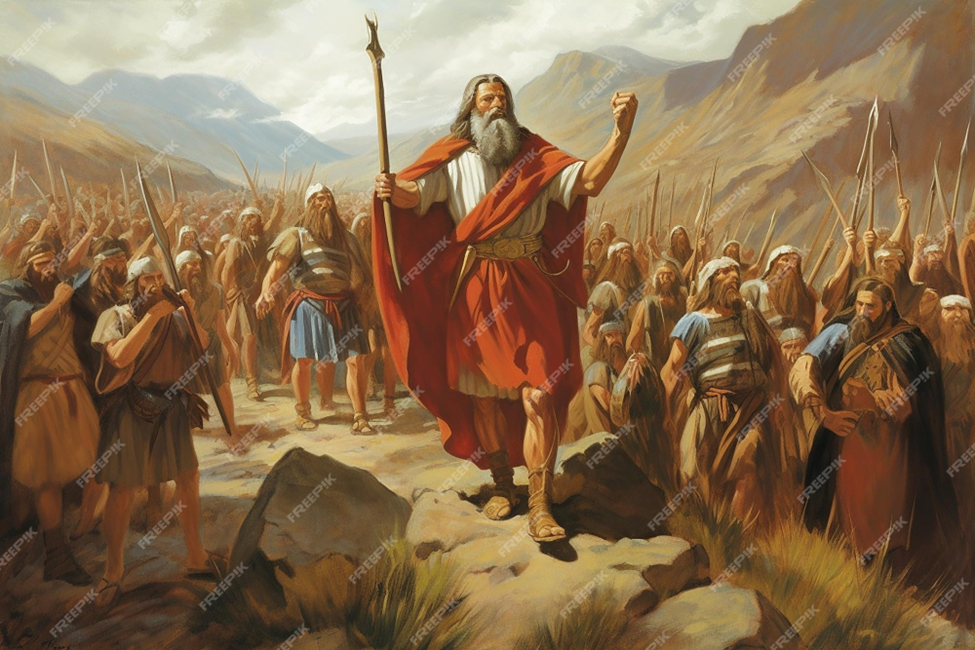
Moses is revered as a prophet and a righteous leader in Judaism, Christianity, and Islam. In Judaism, he is considered the greatest prophet, who spoke to God face to face. The Torah, or Pentateuch (the first five books of the Old Testament), is attributed to him. In Christianity, Moses is seen as a precursor to Jesus Christ, and he appears in the New Testament as well. In Islam, he is known as Musa and is also considered a prophet and messenger of God.

Moses' life and teachings have had a profound impact on the ethical and legal traditions of these religions, shaping beliefs about justice, freedom, and the relationship between humanity and the divine.
Top of Form
Bottom of Form

Comments